Coordinating Monetary Platforms with Match and Race Schedules in Soccer and Equine Betting Systems
Avery Schröder · Jun 12, 2026
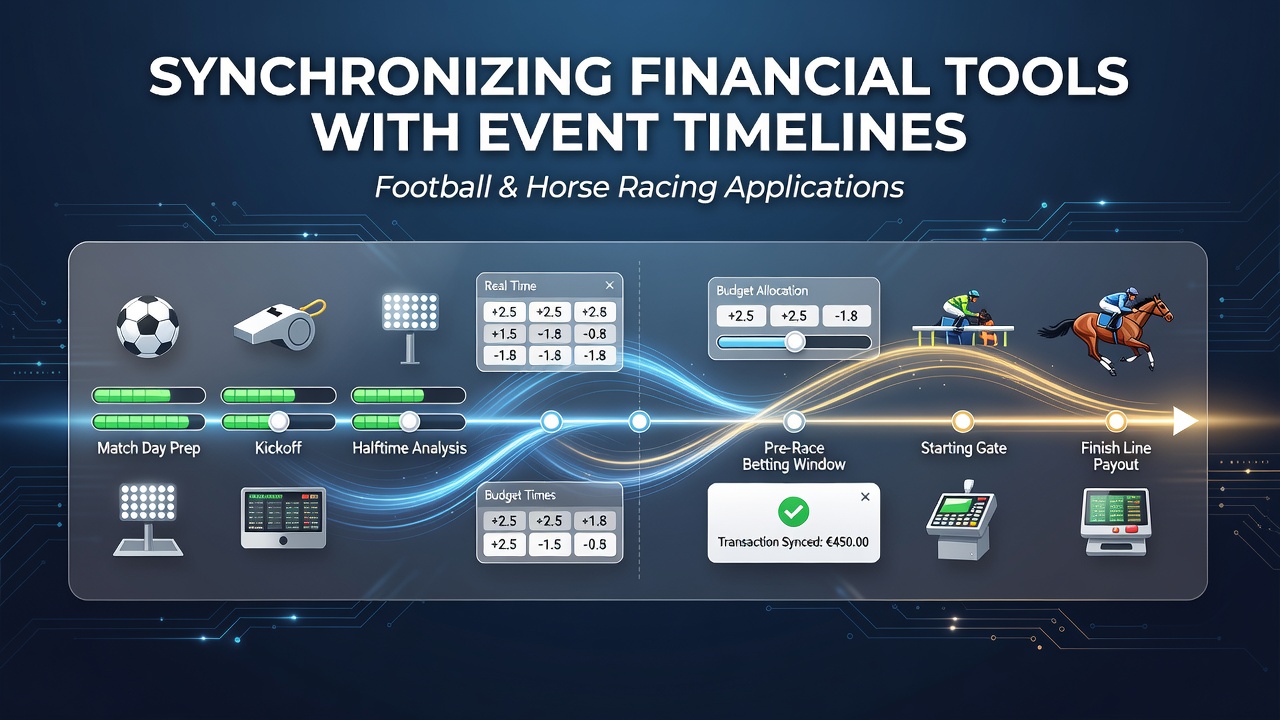
Coordinating Monetary Platforms with Match and Race Schedules in Soccer and Equine Betting Systems
Data indicates that modern betting applications now align payment processing directly with the progression of football matches and horse races through dedicated timeline APIs and event triggers, allowing deposits, withdrawals, and balance adjustments to occur at precise moments during live events. This coordination relies on timestamped data feeds from official match clocks and race start sequences, which feed into backend financial modules to execute transactions without manual intervention. Observers note that such systems reduce latency between user actions and account updates, particularly when odds shift in response to goals, injuries, or horse positions on the track.
Researchers discovered that integration begins with mapping event milestones, such as kickoff, halftime, or the opening of betting windows in horse racing, to corresponding financial states in user wallets. Software platforms achieve this by polling real-time data streams from governing bodies like the Premier League or the British Horseracing Authority, then triggering conditional scripts that authorize fund movements only when specific timeline conditions are met. Those who've studied this process know the architecture typically combines WebSocket connections for continuous event updates with secure payment gateways that validate transactions against current balance thresholds.
Core Mechanisms Behind Timeline Alignment
Systems achieve synchronization through layered data pipelines that convert raw event timestamps into executable financial commands, and this occurs via middleware layers that sit between sports data providers and banking processors. For instance, a goal scored at the 67th minute activates a script that recalculates live odds, updates wallet ledgers, and pushes notification-based deposit prompts to users who have pre-set triggers. Data shows these pipelines handle thousands of concurrent events daily, with error rates below 0.2 percent according to internal platform audits released in early 2026.
What's interesting is how horse racing applications differ slightly by incorporating variable race durations and photo-finish delays into their financial logic, whereas football timelines follow more rigid 90-minute structures plus stoppage time. Experts have observed that both domains use UTC-synchronized servers to prevent discrepancies across global users, and this prevents issues like double-crediting when races conclude at different local times. Studies found that platforms employing machine learning models to predict peak transaction loads during major fixtures achieve smoother scaling without service interruptions.
Implementation in Football Applications
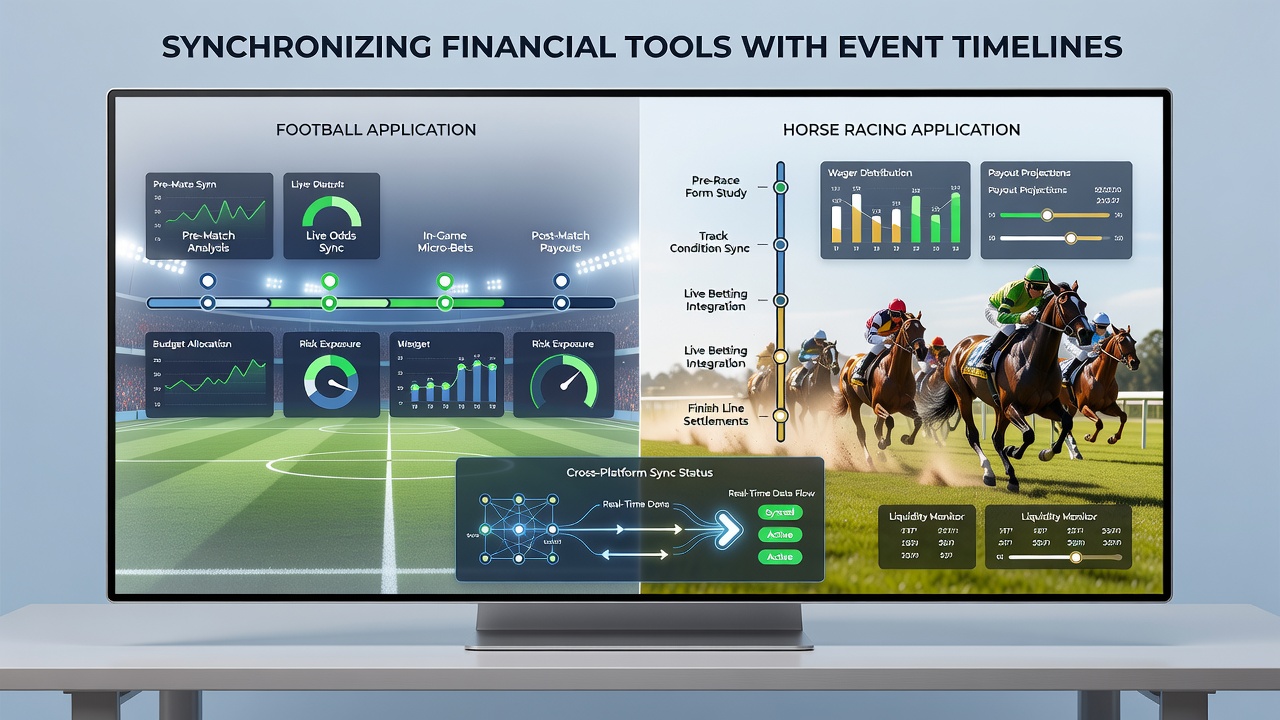
Football betting modules embed timeline hooks that monitor variables including possession changes, card issuances, and substitution windows, linking each directly to financial tool responses such as instant cash-out options or balance top-ups. One study revealed that leading platforms process over 1.2 million timeline-triggered transactions per matchday during peak European seasons, with June 2026 figures showing a 14 percent increase in automated wallet adjustments compared to the prior year. Applications often segment these functions into separate microservices so that a payment failure does not halt live odds streaming or vice versa.
Take one developer team that integrated geofenced timing rules, ensuring users in regulated markets receive deposit confirmations only after the match clock reaches predetermined intervals, thereby complying with local transaction limits. Evidence suggests this approach minimizes regulatory friction while maintaining high-speed execution for users monitoring multiple fixtures simultaneously.
Adaptations for Horse Racing Platforms
Horse racing software synchronizes financial tools by anchoring transactions to race card milestones such as declarations, parade ring entries, and official results postings, which allows punters to fund accounts or claim winnings at exact points without leaving the event view. Figures reveal that Australian platforms using similar systems recorded average transaction completion times of 1.8 seconds during the 2025-2026 season, according to data shared by the American Gaming Association in its technology overview. These platforms incorporate fallback protocols that revert pending bets to pre-race states if a timeline signal is delayed due to weather or track incidents.
Platforms in North America have adopted parallel approaches, with Canadian regulators noting improved audit trails when financial events are timestamped against official race clocks rather than server clocks alone. The reality is that this reduces disputes over late deposits or withdrawals during extended photo-finish reviews, and it supports multi-leg exotic bets that span several races within a single meeting.
Technological and Regulatory Considerations
Security protocols embed encryption keys that rotate with each timeline segment, protecting financial data as it moves between event servers and payment processors, and this layered approach has drawn attention from the Responsible Gambling Council of Canada for its potential to support responsible play limits tied to specific event phases. Developers frequently test these integrations against simulated high-volume scenarios, such as championship finals or major racing festivals, to verify that synchronization holds under load.
June 2026 updates across major vendors introduced enhanced support for cross-sport timeline merging, enabling users to maintain a single wallet while switching between football and horse racing views without manual reconciliation. Observers note that such features rely on unified event schemas that standardize timestamps across disparate sports data formats, reducing integration overhead for operators managing diverse betting verticals.
Conclusion
Coordinated financial and event timeline systems continue to evolve through incremental API refinements and tighter data partnerships between sports authorities and technology providers, delivering measurable improvements in transaction reliability for both football and horse racing applications. Continued monitoring of performance metrics through mid-2026 indicates steady adoption across regulated markets, with emphasis on maintaining precision during variable event durations and high-stakes moments.